I am Alba +
I am an Artist


Painting the Beautiful Collapse of Humanity
Born in Havana and now creating from his studio in Montreal, artist Ernesto Alba doesn’t just make paintings—he makes existential wake-up calls. His work is as much about himself as it is about you, as long as you're human and alive on this planet.
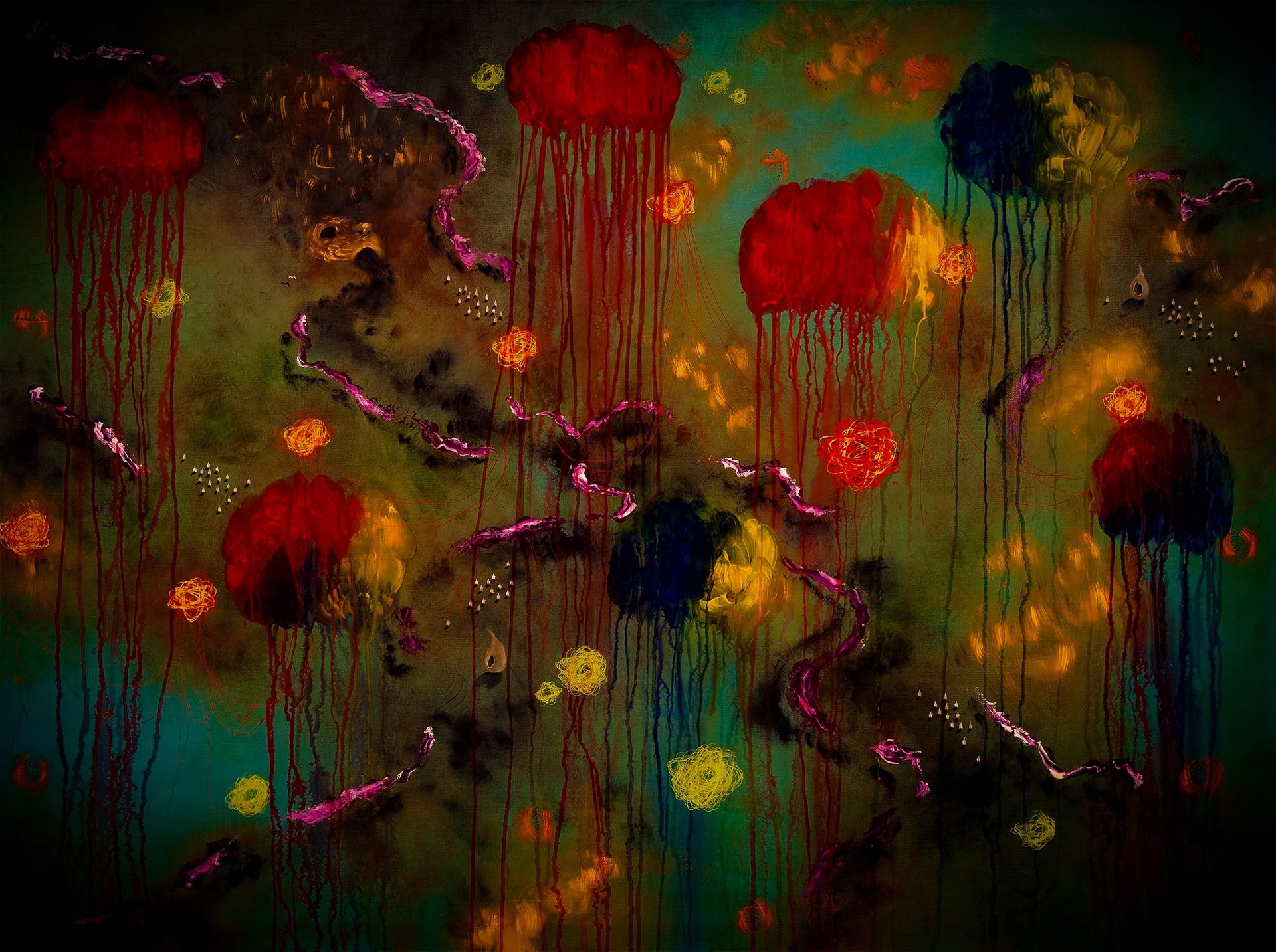
At the core of Alba’s work lies a brutally honest truth: there’s nothing particularly joyful about being human when we’re actively dismantling the very world we live in. His paintings aren’t comfort blankets—they’re visual sirens. Each canvas is a poetic reminder of our self-inflicted planetary decay, a reflection of the ongoing collapse of human society and its forgotten past.
Alba’s roots in Havana are key. He grew up watching his city crumble in slow motion—buildings sagging under the weight of history, people reshaped by scarcity and time. To him, Havana is a hauntingly gorgeous metaphor for global disintegration. Yet, amidst the wreckage, there’s undeniable poetry: sea-washed colors, crumbling facades, and the kind of melancholic beauty that embeds itself deep in the subconscious.
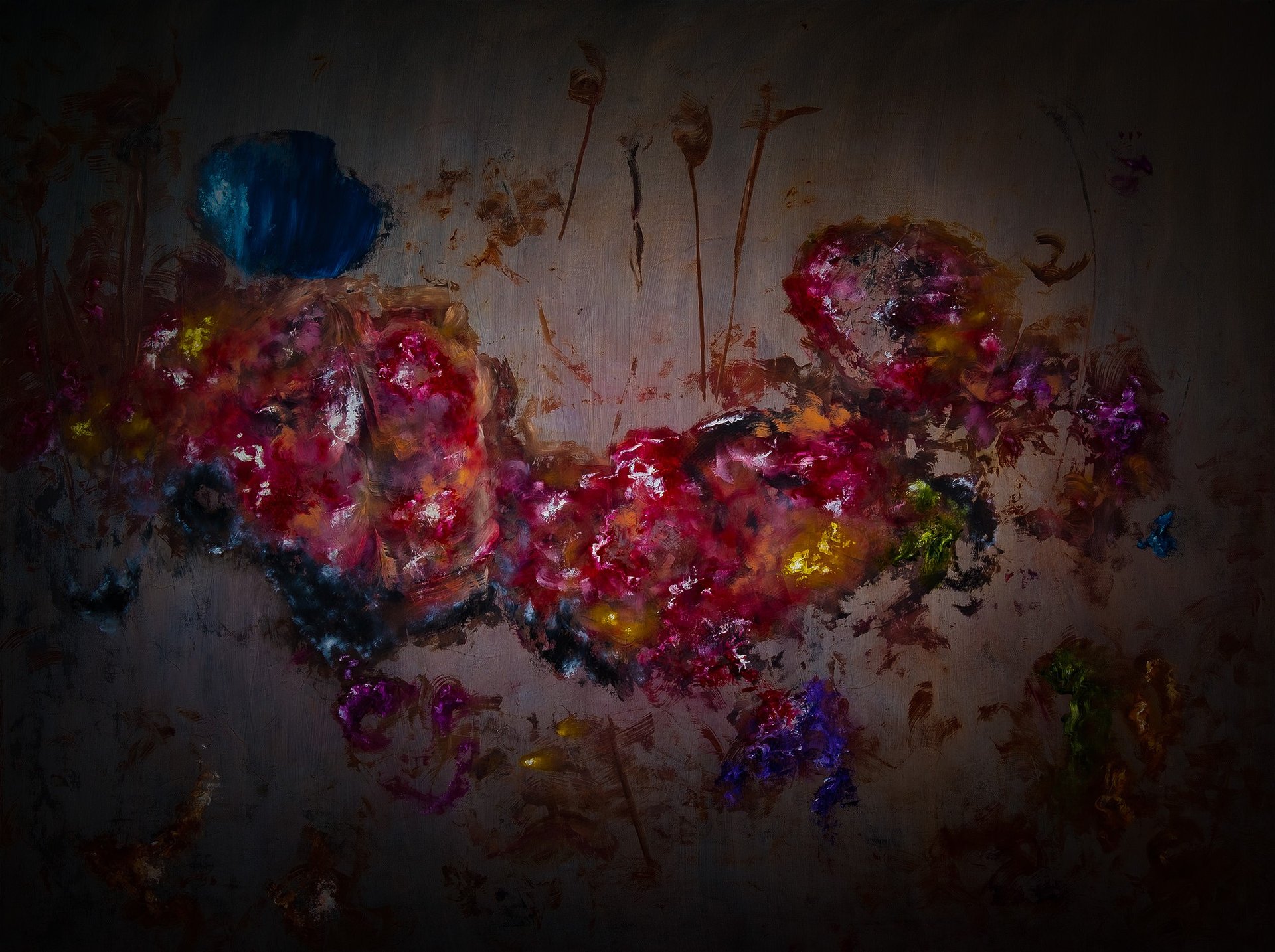
His paintings echo this blend of ruin and romance. Somewhere between abstract and figurative, Alba’s canvases are love letters to the female form, to the turquoise Caribbean Sea, to religious iconography steeped in Cuban Catholicism—especially La Virgen de la Caridad del Cobre. His visual language draws heavily from Renaissance, Baroque, and Rococo art—not just for their ornate palettes, but for their intense observation of the human condition.
And then comes the chaos.
Alba’s creative process is part alchemy, part demolition. He builds up a piece until it’s nearly pristine, only to attack it with solvents, rags, sandpaper, even alcohol—unleashing a hurricane of destruction that tears through his own work. The result? A visceral sense of time, erosion, and entropy—beauty marinated in rot.
If you’ve ever walked Havana’s streets with your eyes wide open, you’ll feel the echo: water stains on walls, rust from ancient pipes, broken tiles (azulejos) forming accidental mosaics. There’s darkness—literal and metaphorical—in those interiors and alleys. But in all that degradation, there’s a strange harmony. A crumbling poetry. A universal decay that’s no longer exclusive to Havana—it’s everywhere.
That’s the power of Ernesto Alba’s art: it’s personal, political, and planetary. It's as much about Catholic saints as it is about concrete cracks. As much about history as it is about what’s ahead.
One thing’s for sure—whatever he paints next, we’ll be watching.
Take a look at some of my paintings
Gallery